technology

u7996237426 a cinematic wide shot of a worker at a glowing la 429bd44b 5092 4cab ab96 a7e89598bbc7 1

The Weekend That Vanished: How Flexible Work Erased Time Off

It started as a perk: the freedom to log on from home, to shift hours around a school run, or to knock off early on a Friday and make it up on Sunday. Flexibility was supposed to give workers more control over their time. Instead, for millions of professionals, it dissolved the very concept of time off. The weekend—a cultural anchor for over a century—has become porous, eroded not by bosses demanding more, but by systems that blur when work begins and ends.

The Weekend That Vanished: How Flexible Work Erased Time Off Read More »

u7996237426 a symbolic editorial illustration of a humanoid f fc2e68ed b57b 4773 ac98 909df6fd5cde 2

Amnesty for Algorithms: Should Code Be Forgiven Like Humans?

When a human being commits a crime, societies debate whether rehabilitation is possible. Can the wrongdoer change? Should they be forgiven? Now consider a flawed algorithm: a bail recommendation system that unfairly penalizes minorities, or a hiring tool that weeds out women’s résumés. If the code is patched, if its “bias” corrected, do we grant it amnesty? Or does the stain of its past errors linger, shaping how we judge its future use?

Amnesty for Algorithms: Should Code Be Forgiven Like Humans? Read More »

u7996237426 a cinematic wide shot of a human silhouette made 2c20ecd3 8dac 40fc b221 a02061aa0e6b 0

Digital Habeas Corpus: Do We Still Own Our Data Selves?

A century ago, courts debated whether the state could detain a body without due process. Today, the question looks eerily similar—but the “body” in question is digital. Every person now trails a data double: a shifting dossier of clicks, purchases, health metrics, and geolocation pings. Banks use it to judge creditworthiness, insurers to price risk, employers to screen candidates. Increasingly, this second self is more decisive than the flesh-and-blood one. Yet unlike our physical bodies, our data selves enjoy no clear legal protection.

Digital Habeas Corpus: Do We Still Own Our Data Selves? Read More »

u7996237426 a cinematic editorial image of a vaccine vial enc 2ea84f37 559d 46fd b20e 36f6a039efae 2

Pandemic Patents: Who Owns the Cure in a Borderless Crisis?

When the next pandemic strikes, the question of who lives and who waits may hinge less on hospital capacity than on the fine print of intellectual property law. Vaccines, antivirals, and monoclonal antibodies can now be developed in record time. But as the world learned in 2020, innovation without access leaves millions unprotected. The scramble for cures in a borderless crisis is no longer just a matter of science—it is a battle over ownership.

Pandemic Patents: Who Owns the Cure in a Borderless Crisis? Read More »

u7996237426 close up of a microphone dissolving into glitchin f14ad143 868d 43b2 91cd 20cf01765f7a 3

Synthetic Voices, Real Consequences

Not long ago, a scammer needed a convincing email or a stolen credit card number. Today, they may only need your voice. With off-the-shelf tools, a few minutes of audio—scraped from a podcast, a TikTok clip, or even a voicemail—can be spun into a synthetic voice nearly indistinguishable from the original. Fraud has always adapted to new technology. What makes synthetic voices different is how deeply they blur the boundary between identity and imitation.

Synthetic Voices, Real Consequences Read More »

u7996237426 a world map morphing into three dramatic maritime 40f225ee 8faa 4bb7 9fab 661a99ecd288 2

Chokepoints Reborn: From Suez and Malacca to a Melting Arctic

At dawn on October 29, 1956, Egyptian forces detonated explosives along the banks of the Suez Canal. The blast reverberated across the Cold War world: Britain and France, fearing for their oil lifeline, would soon invade; the United States, alarmed at Soviet maneuvering, would force them back. A single narrow waterway had plunged empires into crisis.

The drama of Suez was not unique. Maritime chokepoints have always been levers of power disproportionate to their geography. The Strait of Malacca, scarcely 1.7 miles wide at its narrowest, has determined the fortunes of kingdoms from Srivijaya to Singapore. The Dardanelles, gateway between the Mediterranean and Black Sea, helped trigger the Gallipoli campaign of 1915. Whoever commands the bottlenecks of the world commands trade, energy, and, often, history itself.

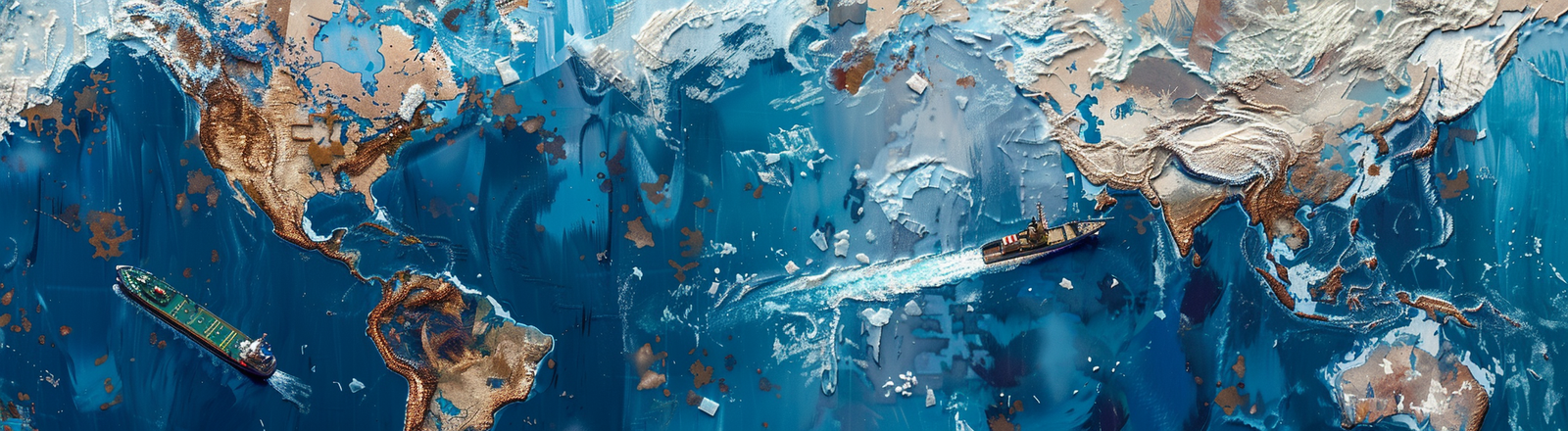
Today, a new chokepoint is emerging—not in the deserts of Egypt or the tropics of Southeast Asia, but across the ice-laden waters of the Arctic. As climate change accelerates, once-impenetrable sea ice is retreating, exposing routes that were for centuries the stuff of explorers’ fantasies. The “Northern Sea Route” along Russia’s Siberian coast and the elusive “Northwest Passage” across Canada’s Arctic Archipelago are becoming navigable for longer stretches each summer. Shipping firms calculate that a Rotterdam–Shanghai voyage could be shortened by up to two weeks. In an age where days translate into millions, that is not a marginal gain; it is a strategic revolution.


Chokepoints Reborn: From Suez and Malacca to a Melting Arctic Read More »

u7996237426 a vast digital library fading into mist shelves o 0ec8baf4 2de9 4a91 89f0 7202877fc2ed 1

The Right to Be Forgotten vs. the Duty to Remember

Europe’s General Data Protection Regulation enshrined an unusual concept into law: the “right to be forgotten.” Citizens may petition for certain records—search results, past infractions, even images—to be removed from digital visibility. In an age where the internet never forgets, the promise of erasure feels like a form of justice.

But every act of forgetting is also an act of memory management. To delete is not merely to protect; it is to reshape the collective archive. And here lies the tension: when does the individual’s right to obscurity conflict with society’s duty to remember?

The Right to Be Forgotten vs. the Duty to Remember Read More »

u7996237426 a wide rural landscape with cornfields and silos 073b79ad fefb 4b97 813b 9bba642ade02 0

Data Centers, Dry Wells: Rural America’s New Faustian Bargain

On the edge of a cornfield in central Iowa, steel skeletons rise where silos once stood. They are not barns but server halls—vast, windowless structures humming with the machinery of the digital age. Inside, racks of servers will soon pulse with cloud traffic for global companies. Outside, residents wonder what will become of their wells.

Across rural America, towns long defined by agriculture are striking deals with technology giants. The bargains are familiar: land for sprawling campuses, generous tax abatements, and promises of jobs. But the new wrinkle is elemental—these facilities devour water and power on scales small communities never imagined.

Data Centers, Dry Wells: Rural America’s New Faustian Bargain Read More »

u7996237426 a modern hospital triage room bathed in cold digi f110057c f601 400a 8187 88e3382f045d 2

Trial by Algorithm: Who Gets Care When AI Triage Sets the Rules

In hospitals around the world, triage has long been the most human of judgments. A nurse in an emergency department glances at a patient, listens to their breath, weighs symptoms against instinct and experience. Decisions are made in seconds, and those decisions often determine survival.

Now, increasingly, algorithms are stepping into that role. Machine learning models can parse vast datasets of vitals, lab values, and historical outcomes in milliseconds. Advocates argue that AI-driven triage reduces bias, speeds up intake, and frees clinicians for higher-level care. In pilot programs from London to Lagos, early results suggest improved throughput and fewer missed critical cases.

Yet moving from pilot to policy is not merely a technical step—it is an ethical threshold. The question is not simply can algorithms triage effectively? but should they be entrusted with choices that are, at their core, moral judgments?

Trial by Algorithm: Who Gets Care When AI Triage Sets the Rules Read More »