pharmanomenon

u7996237426 a world map morphing into three dramatic maritime 40f225ee 8faa 4bb7 9fab 661a99ecd288 2

Chokepoints Reborn: From Suez and Malacca to a Melting Arctic

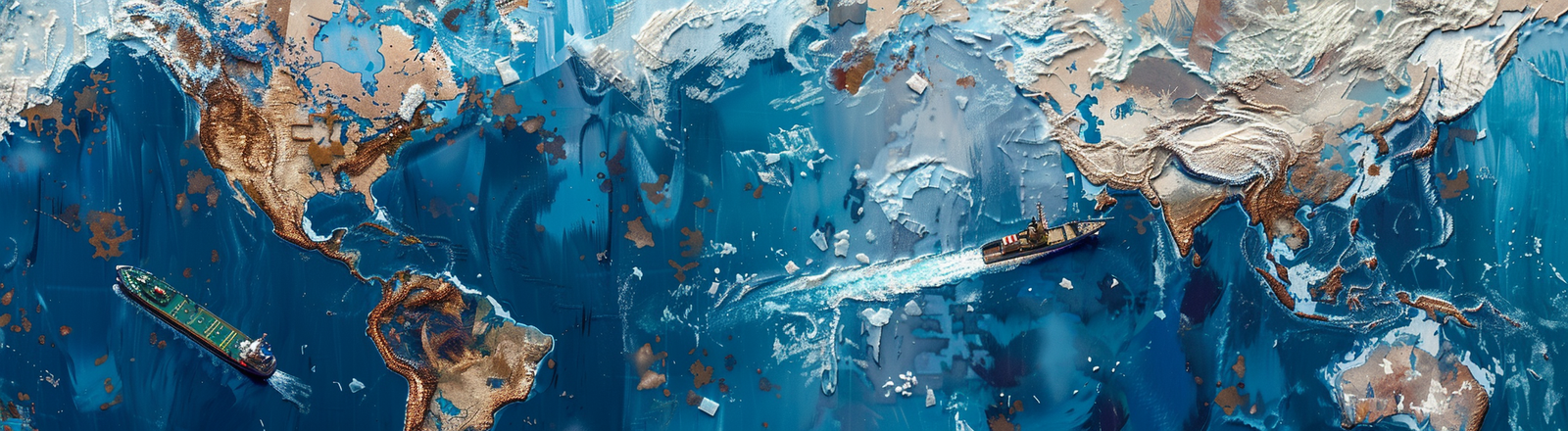
At dawn on October 29, 1956, Egyptian forces detonated explosives along the banks of the Suez Canal. The blast reverberated across the Cold War world: Britain and France, fearing for their oil lifeline, would soon invade; the United States, alarmed at Soviet maneuvering, would force them back. A single narrow waterway had plunged empires into crisis.

The drama of Suez was not unique. Maritime chokepoints have always been levers of power disproportionate to their geography. The Strait of Malacca, scarcely 1.7 miles wide at its narrowest, has determined the fortunes of kingdoms from Srivijaya to Singapore. The Dardanelles, gateway between the Mediterranean and Black Sea, helped trigger the Gallipoli campaign of 1915. Whoever commands the bottlenecks of the world commands trade, energy, and, often, history itself.

Today, a new chokepoint is emerging—not in the deserts of Egypt or the tropics of Southeast Asia, but across the ice-laden waters of the Arctic. As climate change accelerates, once-impenetrable sea ice is retreating, exposing routes that were for centuries the stuff of explorers’ fantasies. The “Northern Sea Route” along Russia’s Siberian coast and the elusive “Northwest Passage” across Canada’s Arctic Archipelago are becoming navigable for longer stretches each summer. Shipping firms calculate that a Rotterdam–Shanghai voyage could be shortened by up to two weeks. In an age where days translate into millions, that is not a marginal gain; it is a strategic revolution.

Chokepoints Reborn: From Suez and Malacca to a Melting Arctic Read More »

u7996237426 a futuristic cityscape split screen style left si a19b7b90 71da 482c be35 97b969ad15bc 1

Downscaling the Future: How Hyperlocal Climate Models Rewrite City Policy

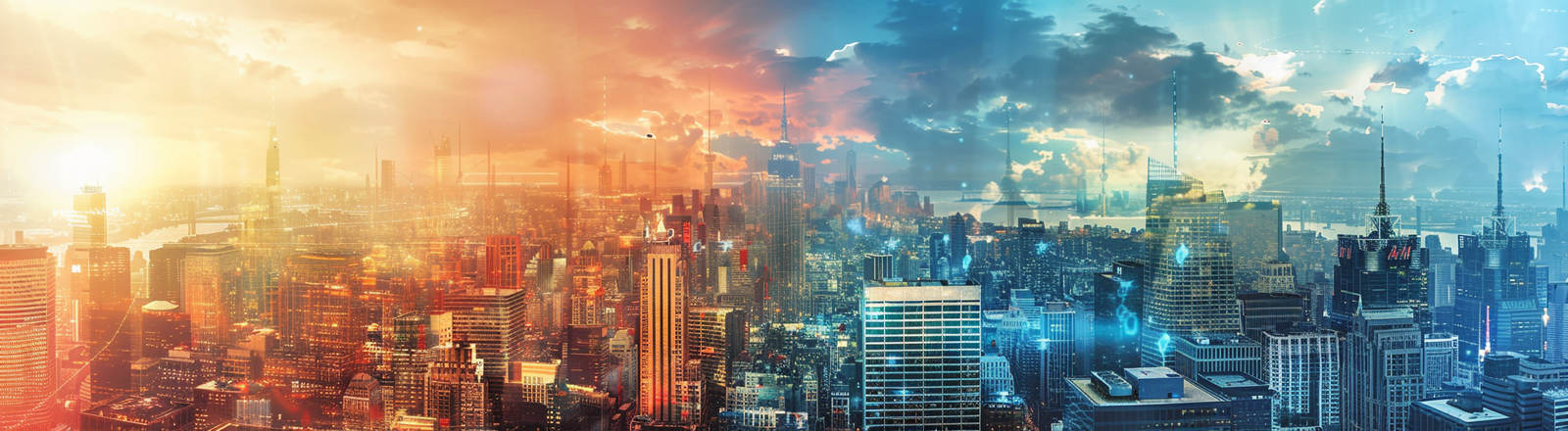
Climate change often feels like a story told at the planetary scale: degrees of global warming, sea levels rising worldwide, models projecting to the year 2100. But for a city planner deciding whether to expand storm drains or plant more trees, those planetary averages are too blunt an instrument. What they need is not a forecast for the Earth, but a forecast for their neighborhood.

That’s where “downscaling” comes in. It’s the scientific process of taking coarse global climate models—think of them as the blurry outlines of a weather map—and sharpening them to the resolution of a city block. Instead of predicting rainfall shifts across an entire continent, downscaled models can estimate how a thunderstorm might behave in a single metropolitan basin.

Downscaling the Future: How Hyperlocal Climate Models Rewrite City Policy Read More »

u7996237426 an office floor dissolving into glowing code desk b2060410 f2f3 4647 b020 9dad35f9d6a9 3

The Middle-Office Meltdown: How AI Is Erasing the ‘Glue Jobs’ That Hold Companies Together

When people imagine automation, they usually picture robots replacing factory workers, or algorithms taking over call centers. The popular storyline is frontline roles versus machines. But a quieter transformation is underway—one that strikes at the “middle office,” the layer of analysts, coordinators, and specialists who keep companies running behind the scenes.

These are not the jobs that grab headlines. They’re the project managers who translate strategy into deadlines. The compliance officers who ensure reports are filed correctly. The junior accountants reconciling invoices. Individually, their work rarely makes the company newsletter. Collectively, they are the connective tissue—the glue—that keeps organizations functioning. And AI is coming for them.

The Middle-Office Meltdown: How AI Is Erasing the ‘Glue Jobs’ That Hold Companies Together Read More »

u7996237426 a vast digital library fading into mist shelves o 0ec8baf4 2de9 4a91 89f0 7202877fc2ed 1

The Right to Be Forgotten vs. the Duty to Remember

Europe’s General Data Protection Regulation enshrined an unusual concept into law: the “right to be forgotten.” Citizens may petition for certain records—search results, past infractions, even images—to be removed from digital visibility. In an age where the internet never forgets, the promise of erasure feels like a form of justice.

But every act of forgetting is also an act of memory management. To delete is not merely to protect; it is to reshape the collective archive. And here lies the tension: when does the individual’s right to obscurity conflict with society’s duty to remember?

The Right to Be Forgotten vs. the Duty to Remember Read More »

u7996237426 a giant biometric scanner with a glowing human fa b3f15c87 3564 4434 b665 4adb22a37aee 3

Passwordless, Priceless? The Hidden Risks of a Biometric Internet

For decades, the humble password has been the gatekeeper of our digital lives. Clumsy though it was—reused, forgotten, scribbled on sticky notes—it had one advantage: it could be changed. When compromised, you could burn it down and start again.

Now, tech companies promise a sleeker, safer future: the passwordless internet. Apple, Microsoft, and Google are pushing “passkeys”—cryptographic tokens tied to a device or biometric signature. Instead of typing in “P@ssw0rd123,” you log in with a fingerprint, a face scan, or a hardware key. Faster, frictionless, more secure.

Passwordless, Priceless? The Hidden Risks of a Biometric Internet Read More »

u7996237426 a ceremonial return of an artifact in an african 30c0aec7 05ea 424a ab50 e51ef6c219fe 2

After Repatriation: What Returns Mean for Living Communities

In a small courtyard in Benin City, Nigeria, the air thick with incense and drumbeats, a bronze head was lowered onto a woven mat. It had traveled for more than a century—from palace to colonial ship, from European museum to climate-controlled gallery—and now, finally, back home. The gathered crowd did not whisper the language of “cultural property” or “collection management.” They spoke instead of ancestors, of repair, of voices long silenced.

Repatriation is often framed in the language of restitution: the object as evidence of historical theft, the return as moral correction. Yet in the lives of communities, return is not only an act of closing the past. It is also an opening—a re-entry of ritual power, of livelihoods, of contested authority.

After Repatriation: What Returns Mean for Living Communities Read More »

u7996237426 a wide rural landscape with cornfields and silos 073b79ad fefb 4b97 813b 9bba642ade02 0

Data Centers, Dry Wells: Rural America’s New Faustian Bargain

On the edge of a cornfield in central Iowa, steel skeletons rise where silos once stood. They are not barns but server halls—vast, windowless structures humming with the machinery of the digital age. Inside, racks of servers will soon pulse with cloud traffic for global companies. Outside, residents wonder what will become of their wells.

Across rural America, towns long defined by agriculture are striking deals with technology giants. The bargains are familiar: land for sprawling campuses, generous tax abatements, and promises of jobs. But the new wrinkle is elemental—these facilities devour water and power on scales small communities never imagined.

Data Centers, Dry Wells: Rural America’s New Faustian Bargain Read More »

u7996237426 a scorching city street contrasted with lush gree a132b3ec 9222 443e 8b07 08236b862556 2

Shade Is Infrastructure: Designing Cities to Survive Heat

This summer, Phoenix recorded 31 consecutive days above 110°F. In Delhi, rooftop temperatures climbed so high that tin-sheet housing warped. Paris, once known for temperate summers, is rewriting building codes to address lethal heat waves. Around the world, cities are learning a hard truth: extreme heat is not just uncomfortable, it is deadly.

Yet most urban policy still treats shade as an amenity rather than infrastructure. Trees are considered beautification, awnings a design flourish, green canopies an afterthought in the fight for limited budgets. The result is predictable: wealthier neighborhoods enjoy leafy streets and shaded parks, while low-income residents endure what researchers call the “heat gap”—a measurable difference in ambient temperature that maps almost perfectly onto race and income.

Shade Is Infrastructure: Designing Cities to Survive Heat Read More »

u7996237426 a digital dollar coin glowing over a financial sk acc67139 b879 4c02 b690 415c11ddde6f 2

Stablecoins as Shadow Reserves: Finance Without a Safety Net

In the long history of money, reserves have been the ballast that steadies the system. Central banks hold gold or dollars to reassure markets that when turbulence strikes, redemption is possible. Yet a new form of “reserve” has been growing in the shadows: stablecoins, digital tokens pegged to the U.S. dollar and traded at lightning speed across global platforms.

Tether, USD Coin, and a handful of others now represent more than $150 billion in circulation. They promise a simple proposition: one coin, always redeemable for one dollar. To traders in crypto markets, they are the grease that keeps transactions flowing. To investors in emerging economies, they have become a lifeline—an unofficial dollarization for those wary of local inflation.

But behind this apparent stability lies fragility. Stablecoins are not backed by a central bank’s balance sheet. They are private promises, supported by opaque portfolios of short-term debt and cash equivalents. And unlike bank deposits, they are not insured.

Stablecoins as Shadow Reserves: Finance Without a Safety Net Read More »