By Dr. Leila Mbaye
When people type Adopt Dog near Me into a search bar, they’re rarely thinking in epidemiology, yet that viral query unfolded like a social epidemic—one that reveals the surging human need for connection, belonging, and moral kinship. In this essay, I trace how the Adopt Dog near Me moment became a cultural mirror, where everyday impulse, media spectacle, and deeper identity thresholds converge.
A Puppy’s Impact: When Fiction Becomes Domestic Reality
In July 2025, the James Gunn–directed Superman blockbuster introduced audiences to Krypto, a CGI schnauzer-terrier mix modeled on Gunn’s adopted rescue dog, Ozu. The effect was immediate: according to The Guardian, Google searches for “Adopt Dog near Me” surged by more than 500 percent, and Warner Bros. partnered with Best Friends Animal Society to waive adoption fees nationwide. Within days, hundreds of dogs had found homes through shelters.
This digital wave of longing is not new. Historically, films such as 101 Dalmatians triggered demand surges for particular breeds, often leaving shelters overwhelmed when enthusiasm outpaced commitment. A 2014 PLOS One study confirmed that media portrayals can drive temporary spikes in breed-specific adoptions, with mixed consequences. The recent Adopt Dog near Me surge, however, feels distinct—grounded in Gunn’s personal narrative of rescuing Ozu, imbued with authenticity, and tethered to partnerships that promoted ethical adoption rather than impulsive purchasing.
Ritual and Resonance: Media, Identity, and the Demand to Belong
This moment is much more than a fluffy trend. It maps onto deeper anthropological currents—pet humanization, identity formation, and the politics of belonging. Treating pets as emotional kin—complete with birthday parties, Instagram accounts, and elaborate healthcare—is no longer a novelty, but a foundational shift in how humans seek connection. As Time Magazine notes, pet adoption in the U.S. has steadily evolved from utilitarian necessity to emotional lifeline, with households increasingly framing dogs as family members.
The human–canine bond is ancient. Archaeologists have uncovered burials where humans and dogs were interred together as early as 15,000 years ago, evidence that companionship transcended utility. In the modern era, this relationship expands into therapy, identity, and even digital life. When media portrayals humanize a dog—giving it flaws, backstory, resilience—they awaken a yearning that exceeds companionship: we search for belonging, selfhood, and ethical resonance.
Media scholarship helps explain why. A study in Media and Communication shows that inspiring portrayals paired with positive social cues—comments, shares, cheering crowds—can spark adoption intentions even among those with limited resources. And as Psychology Today reports, it is shares, not likes, of shelter posts that most strongly correlate with successful adoptions, proving that ethical impulses travel best through networks of belonging.
Between Trend and Transformation: Community Practices and Care
The Adopt Dog near Me wave also intersected with broader institutional shifts. In 2024, Best Friends Animal Society reported encouraging shelter trends: adoptions rose slightly, and euthanasia rates declined. Municipal shelters, in particular, saw notable improvements, reflecting growing civic engagement.
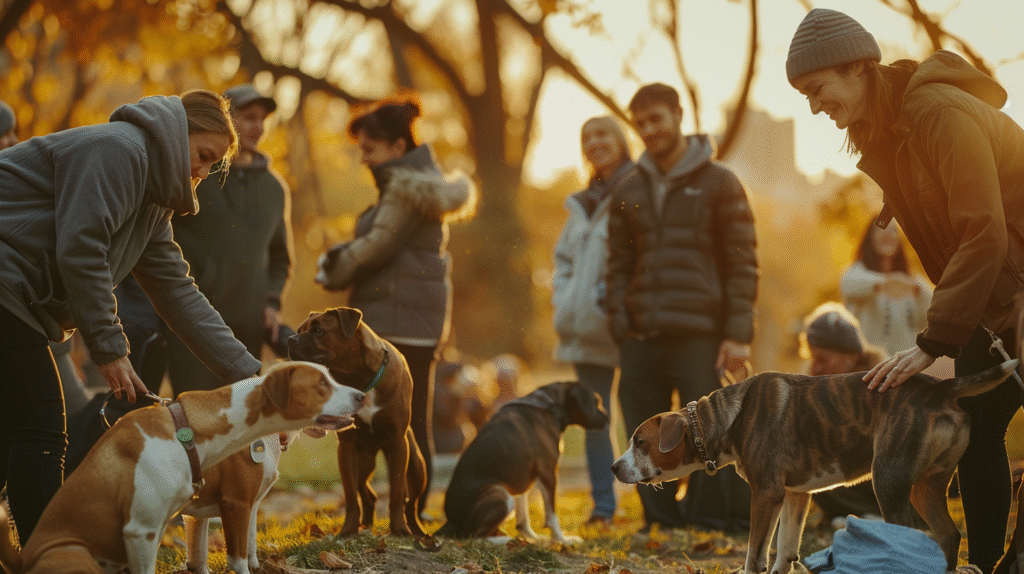
Yet trends remain fragile. The pandemic era sparked a surge of pet adoptions—but also heartbreaking returns as circumstances shifted. Recent data show a modest drop in dog adoptions since 2019, reminding us that emotional spikes often fade without structural support. Research from Virginia Tech highlights the importance of community-based programs—like short-term fostering or shelter outings—which can dramatically improve adoption rates by giving potential owners a taste of relational commitment before they decide.
The lesson is clear: belonging requires infrastructure. Emotional sparks, whether triggered by a movie or a social media campaign, must be matched by systems that encourage sustainable care.
Of Dogs and Belonging: What “Adopt Dog near Me” Reveals Now
When someone searches Adopt Dog near Me, they are not just seeking a pet—they are seeking a role in a shared narrative. To adopt is to anchor oneself in community, to join a chorus of caretakers bound by moral responsibility. Media platforms become cultural hearths; a viral dog on a screen becomes both symbol and invitation.
This moment encapsulates the tension between spectacle and ethics. It was fueled by cinematic enchantment, yet it succeeded because institutional frameworks—shelters, nonprofits, adoption campaigns—channeled fleeting desire into durable commitment. In this way, identity itself becomes negotiated through dogs: not simply what we see, but what we choose to become through care.
Into the Shared Future of Kinship
The Adopt Dog near Me movement invites us to take stock of our emotional hunger, our media-saturated identities, and our responsibilities as caretakers of animals and of one another. If the impulse to adopt is a spark, then our communities must be the sustaining embers that nurture real, lifelong kinship.
In many ways, this story echoes other cultural negotiations of belonging. Just as the search for a rescue dog becomes an act of identity, so too do broader rituals of lineage and memory shape how communities understand themselves. As explored in Hashtag Ancestry: When Genealogy Goes Viral, our yearning for kinship—whether through pets or ancestral roots—reveals how identity is always a shared construction.