productivity

Human figure in a quiet kitchen space partial body

Simple Meal Prep for Beginners: The Small Habit That Quietly Transforms Your Health, Stress, and Daily Rhythm

If you’ve ever wondered whether simple meal prep for beginners is worth the effort, the honest answer is this: it’s one of the smallest habits with the biggest ripple effects on your daily experience. Not because it turns you into a perfect eater or a productivity machine, but because it creates a sense of steadiness that most of us rarely feel. In a world where your energy is constantly pulled in competing directions, meal prep becomes a quiet anchor — a subtle but powerful form of self-respect. You don’t do it to become someone else. You do it to feel more like the person you’ve always hoped you could be.

Simple Meal Prep for Beginners: The Small Habit That Quietly Transforms Your Health, Stress, and Daily Rhythm Read More »

mental health in remote work wide cinematic edito e2021b9d 4590 44b3 9eba 809ab1690927 3

The Hidden Crisis of Mental Health in Remote Work: Why Boundaries Must Be Reinforced

In the evolving world of work, mental health in remote work has become one of the most urgent yet underappreciated challenges of the 21st century. Remote arrangements once symbolized freedom: no commute, greater autonomy, and flexibility that promised to improve quality of life. Yet the same systems that liberated workers from office walls have also eroded psychological boundaries, intensified inequality, and created new risks for professional stability. This essay unpacks how blurred lines, economic pressures, and social isolation are reshaping labor, and what structural reforms are needed to protect well-being in a hybrid future.

The Hidden Crisis of Mental Health in Remote Work: Why Boundaries Must Be Reinforced Read More »

u7996237426 cinematic satellite view of earth at night showin 67fbba2a 76a2 4e68 9328 298f04ee9176 3

The Grid Divide: Why Energy Access Is the Real Currency of Nations

For decades, gross domestic product has served as the shorthand for national strength. Policymakers, investors, and journalists alike speak of GDP growth as if it were destiny. Yet in the twenty-first century, a different metric may matter more: the hum of the electric grid. Where energy is abundant, economies thrive. Where it is scarce, even the most promising industries stall. Electricity is not just a utility—it is the real currency of nations.

The Grid Divide: Why Energy Access Is the Real Currency of Nations Read More »

u7996237426 a modern editorial illustration of office workers 97243451 3df8 4bc2 a812 3cd181fc2dcd 3

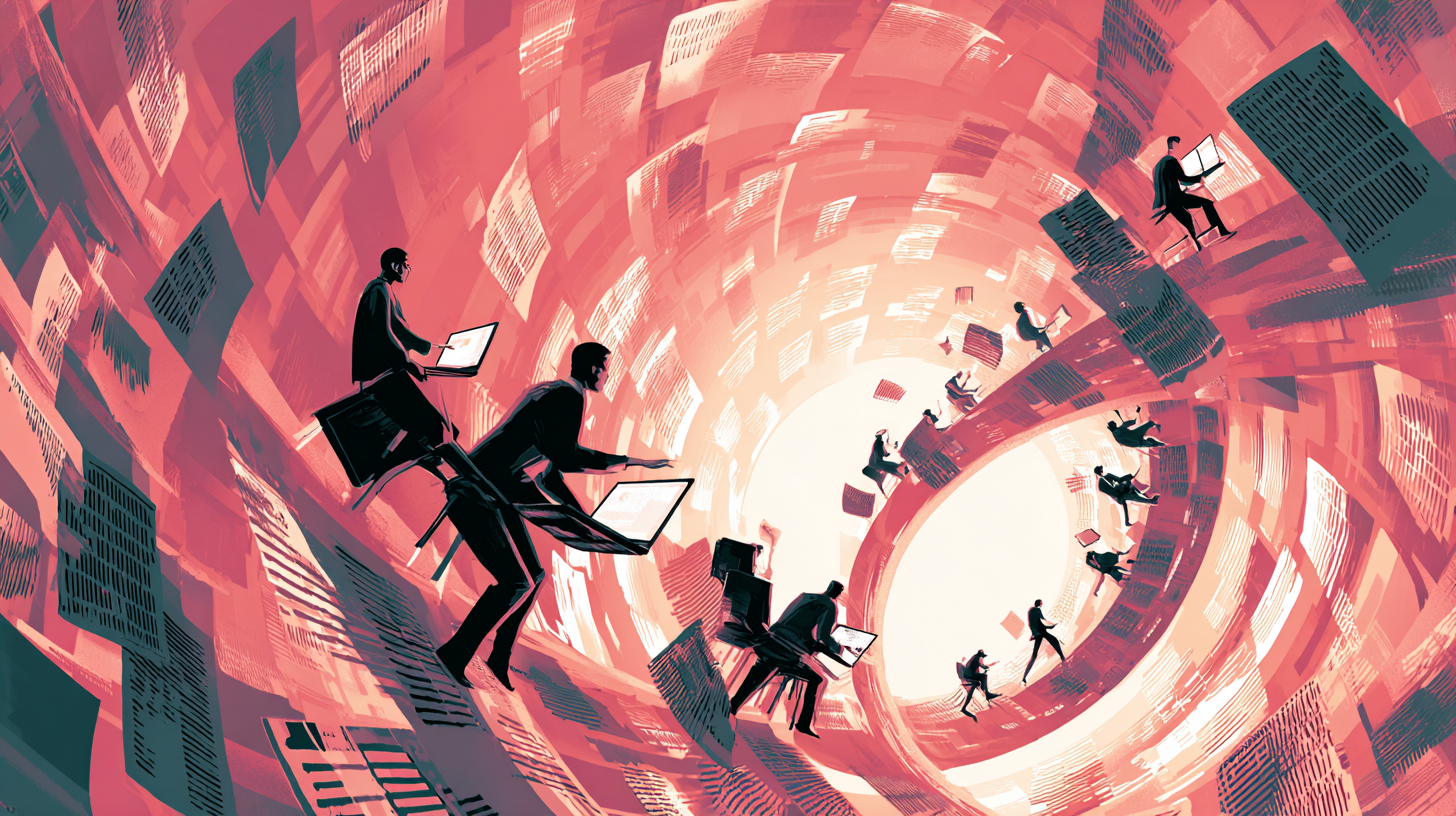
The Productivity Paradox: Why Working Smarter Still Feels Like Working More

We were promised that technology would free us. Faster computers, smarter software, collaborative platforms — each innovation arrived with the assurance that work would become lighter, quicker, and less consuming. And in a narrow sense, this is true. What once took hours can be done in minutes. Yet few of us feel liberated. Instead, the more we automate, the more our schedules fill. We are living inside the productivity paradox: working smarter but feeling busier than ever.

The Productivity Paradox: Why Working Smarter Still Feels Like Working More Read More »

u7996237426 stacks of diplomas unraveling into digital fragme ca4bed3c b815 41d8 8612 f84e1640a19b 1

The Credential Collapse: When Degrees No Longer Signal Value

For decades, the bachelor’s degree has served as America’s most reliable employment filter. A diploma didn’t just say you learned Shakespeare or organic chemistry; it signaled that you could stick with something, follow instructions, and “make it” through a system. Employers leaned on the degree as shorthand for readiness. But the system is wobbling. Rising costs, declining returns, and the explosion of alternative credentials are destabilizing higher education’s quiet role as the labor market’s sorting mechanism.

The Credential Collapse: When Degrees No Longer Signal Value Read More »

u7996237426 a sleek futuristic office bathed in cold fluoresc b359b2cb 9ef7 4114 8436 863ee1d387a6 3

Quietly Fired by AI: The Disappearing Middle Manager

The middle manager was once the backbone of corporate life—interpreting strategy from above, relaying it to teams below, and smoothing the inevitable frictions in between. But in offices increasingly mediated by dashboards, workflow platforms, and algorithmic oversight, that role is evaporating. No memo announces the change. Instead, one by one, middle managers discover that the very systems designed to help them are quietly taking their place.

Quietly Fired by AI: The Disappearing Middle Manager Read More »

u7996237426 split scene of a living room as both office and h 75b61239 0e8e 4b49 8b88 9a4400783c0f 3

The Second Shift Online: How Remote Work Reinvented Domestic Labor

When the pandemic sent millions of workers home, remote work was hailed as liberation. No more commutes, more flexibility, a chance to balance career and life. But what many households discovered was less balance and more blending — a seamless overlap of professional and domestic responsibilities. And much like in the pre-pandemic economy, women disproportionately shouldered the invisible labor. Remote work didn’t erase gendered divisions of labor; it re-coded them into the digital age.

The Second Shift Online: How Remote Work Reinvented Domestic Labor Read More »

u7996237426 a cinematic wide shot of a worker at a glowing la 429bd44b 5092 4cab ab96 a7e89598bbc7 1

The Weekend That Vanished: How Flexible Work Erased Time Off

It started as a perk: the freedom to log on from home, to shift hours around a school run, or to knock off early on a Friday and make it up on Sunday. Flexibility was supposed to give workers more control over their time. Instead, for millions of professionals, it dissolved the very concept of time off. The weekend—a cultural anchor for over a century—has become porous, eroded not by bosses demanding more, but by systems that blur when work begins and ends.

The Weekend That Vanished: How Flexible Work Erased Time Off Read More »

u7996237426 modern office skyline split into two halves one v ac254283 1563 4784 a6e8 00818941cd2a 1

The Four-Day Workweek Experiment: Productivity Miracle or Mirage?

The four-day workweek is having a moment. From tech startups in California to government pilots in Europe, companies are asking: what happens if we shave a day off the calendar? The idea sounds almost utopian—same pay, fewer hours, happier workers. But behind the headlines lies a more complicated story, one where the data is promising but the trade-offs are real.

The Four-Day Workweek Experiment: Productivity Miracle or Mirage? Read More »

u7996237426 ultra wide cinematic image of a modern open offic caec6a14 6f27 47b8 995c 6961d840e06e 3

The Productivity Trap: Why Working Smarter Isn’t Always Working Less

A marketing manager I spoke with recently had just finished a two-hour task in thirty minutes, thanks to a new AI-driven content tool. She was proud — until her boss, seeing the speed, handed her two more projects “while she had time.”

That’s the productivity trap in action: efficiency gains that should free us end up filling the same hours — or more — with extra work.

Economists call this the “rebound effect,” and it’s been quietly shaping labor markets for over a century. The technologies that make us faster, more accurate, or more organized can paradoxically tighten the workload rather than loosen it.

The Productivity Trap: Why Working Smarter Isn’t Always Working Less Read More »