By Dr. Liora Watterson
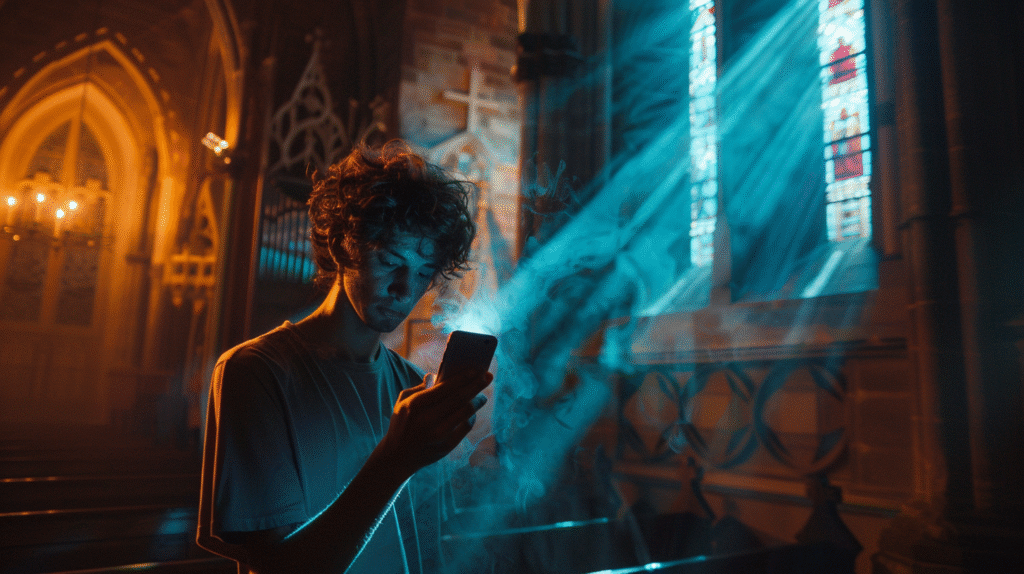
At dawn, before coffee or prayer, millions reach for the glow of their phones. A thumb swipes down, the screen reloads, and with it comes the possibility of revelation: a new message, a headline, a notification that insists the world has shifted overnight. This act—the compulsive refresh—resembles not just habit but ritual. It echoes the rhythm of ancient devotions, gestures repeated not because they always yield change, but because they promise the possibility of it.
Liturgies of the Everyday
Religious traditions have long organized time through repetition: the toll of monastery bells, the daily prayer cycle, the lighting of Sabbath candles. These acts gave structure to uncertainty, a cadence to existence. Online, refresh functions similarly. Each swipe affirms participation in a larger order of meaning—the digital agora, the collective stream. It is a ritual that sacralizes attention, binding the self to a community of watchers and responders.
Yet unlike traditional liturgy, which pointed outward—to the divine, to the transcendent—refresh often points inward, feeding the self with microbursts of affirmation or outrage. The object of devotion is not God or cosmos but novelty itself.
The Theology of Anticipation
What does it mean to wait for something that may not arrive? Theologians once called this adventus: the expectant stance toward the unknown. In digital life, every refresh carries a similar eschatology, a miniature anticipation of revelation. The new post, the breaking news alert, the unseen message—all embody the promise that what is hidden will be unveiled.
But unlike sacred revelation, the digital gift is rarely transformative. More often, it is banal: another meme, another update, another headline indistinguishable from the last. The ritual sustains itself not because the content is profound, but because the act of awaiting feels indispensable.
Power and Priesthood
If refresh is ritual, then platforms are its cathedrals, designed with deliberate liturgical architecture. Infinite scroll is a kind of labyrinth, drawing the participant deeper into the sacred space of engagement. Notifications serve as bells, calling the faithful back to the fold. The “like” button becomes a token of communion.
And just as priests once mediated access to the divine, algorithms now mediate access to the stream. They determine which revelations appear, which remain concealed, and which voices are amplified or silenced. The liturgy is universal, but the scripture is selectively revealed.
Toward Conscious Devotion
To name refresh as ritual is not to dismiss it, but to interrogate it. Rituals can heal, but they can also bind. The question is not whether we should abandon digital liturgies—they are now woven into daily life—but whether we can approach them with the consciousness once reserved for prayer.
In acknowledging refresh as devotion, we reclaim the power to ask: what altar am I kneeling before? And is the god of novelty one worth worshiping?