By Dr. Leila Mbaye
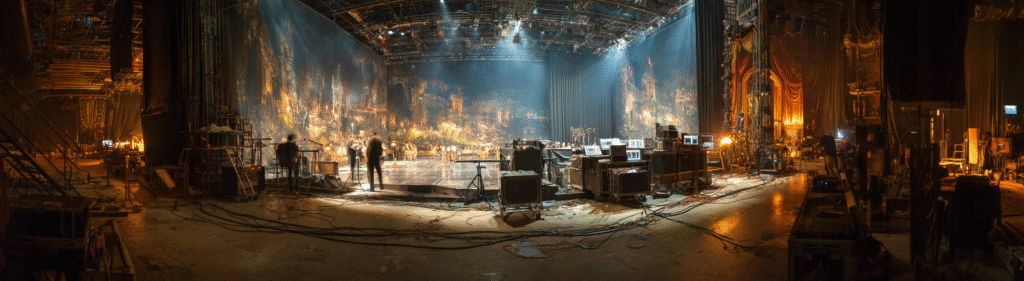
In a converted warehouse in Dakar, dancers rehearse to the sharp rhythms of sabar drums. The choreography is tight, the costumes freshly stitched. But these are not the dances they grew up with in neighborhood gatherings or family celebrations. The steps have been trimmed, synchronized, and sequenced to fit a twenty-minute performance slot at a European arts festival.
Outside, a tour bus idles, waiting to take the troupe to the airport. In their luggage: not just fabric and drumsticks, but a version of culture tailored for export.
The Art of Translation — and Omission
Every culture that travels must translate itself. Translation, though, is never neutral. To make a tradition legible to outsiders, artists and curators often simplify narratives, shorten rituals, and emphasize the “recognizable” elements — the ones most likely to elicit applause or funding.
A centuries-old ceremony may be reduced to a single, photogenic gesture. A folk song’s dissonant notes may be smoothed into a pleasing harmony. In this way, cultural expression becomes a curated setlist: part heritage, part performance, part marketing pitch.
Who Decides the Version We See?
The packaging process is rarely in the artists’ hands alone. International presenters, festival directors, and arts funders often influence what is “appropriate” for a global stage. Their decisions — framed as logistical or aesthetic — can reflect unspoken biases about what will sell to a foreign audience.
Over time, these preferences feed back into the culture itself, as artists begin to create with export in mind. What began as a selective presentation becomes the dominant narrative, even at home.
Heritage in the Marketplace
The global appetite for cultural exchange is genuine, and it can bring real benefits: financial stability for artists, cross-cultural understanding, and visibility for traditions that might otherwise fade. But when the market becomes the main arbiter, culture risks being shaped more by what is palatable than by what is authentic.
Anthropologists call this “staged authenticity” — a performance of culture that meets audience expectations, often at the expense of the messier, more complex reality.
The Loss Between the Lines
What is lost in translation is not only detail, but meaning. A dance divorced from the festival that once gave it purpose is no longer embedded in the same web of relationships and responsibilities. A song sung for tourists does not carry the same weight as one sung to mark a birth or a harvest.
The performance may be beautiful, but beauty is not the same as belonging.
Toward a More Reciprocal Stage
A more ethical global stage would:
Invite artists to present the context as well as the content.
Support longer, slower exchanges where audiences can encounter the full breadth of a tradition.
Resist the urge to smooth away the parts that challenge or confuse.
At the Dakar rehearsal, the dancers pause between sets, slipping into an unchoreographed exchange — a few spontaneous steps, a burst of laughter. No ticket-buying audience will see it. But here, in the unscripted moment, the culture breathes freely. The challenge is to build a global stage where such moments don’t have to be hidden.