By Elias Watanabe
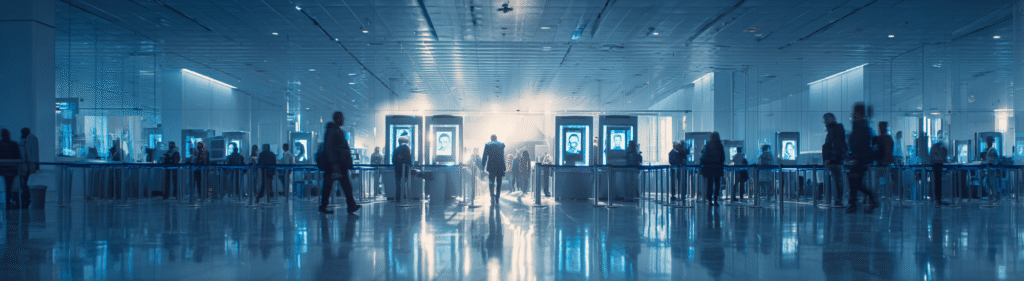
At the airport check-in kiosk, the stadium turnstile, even the neighborhood convenience store, a simple glance at a camera is increasingly enough to pass through. The promise is frictionless access: no tickets, no cards, no passwords. But behind the convenience lies a bargain—one most of us have not consciously struck. In trading faces for entry, we are normalizing a form of surveillance that is hard to roll back.
The Convenience Trap
Facial recognition has surged not because of explicit public demand, but because it solves a problem many barely noticed: the seconds wasted fumbling with ID cards or QR codes. Airlines frame it as seamless travel, gyms as contactless efficiency, offices as security. Each incremental use case is minor, but together they weave a new fabric of everyday life.
Like credit cards in the mid-20th century, what begins as optional quickly becomes infrastructure. The convenience is real—but so is the narrowing of alternatives. When the “fast lane” is biometric, those who resist may find themselves treated as second-class citizens.
Case Studies in Quiet Expansion
In China, facial recognition has become the standard for everything from train boarding to dormitory access. In the United States, Madison Square Garden drew attention for using it to screen—and bar—lawyers from firms engaged in litigation against the venue. In India, the Aadhaar biometric system, initially voluntary, has become entangled with access to welfare benefits, despite privacy concerns.
Each case reflects the same trajectory: a tool framed as neutral verification becomes a gatekeeper for rights, benefits, or freedoms. Unlike passwords, faces cannot be changed if compromised. The bargain is permanent.
The Shadow of Surveillance
Privacy advocates warn of mission creep. Data collected for convenience can easily be repurposed for policing, immigration enforcement, or commercial profiling. A database of faces is not just an authentication tool—it is a potential surveillance dragnet. Once normalized, its use becomes difficult to restrict, especially in moments of crisis. History shows that rights surrendered under the banner of emergency rarely return intact.
And yet, many shrug. “I have nothing to hide,” the refrain goes. But the issue is not secrecy—it is control. Who owns the infrastructure of recognition? Who decides how your face, once captured, may be used?
Toward a Different Future
The answer is not necessarily to ban biometrics outright, but to insist on guardrails. That means clear consent, transparency on data storage, strict limits on secondary uses, and genuine alternatives for those who refuse. Without such measures, we are sleepwalking into a system where identity is no longer something we hold, but something that is held about us.
The bargain is not inevitable. It can still be renegotiated—if we recognize that convenience, seductive as it is, comes at a cost greater than a glance.