By Marcus Havelock
In the winter of 1992, I stood on a bridge in Mostar, notebook in one hand, frost crystallizing in my beard, and watched the river carve its indifferent way through a city on the edge of civil war. The air carried the brittle silence that descends when diplomacy has failed and artillery is the next inevitability.
That same chill—intangible but unmistakable—returned in 2014, as Russian troops without insignia fanned out across Crimea. By 2022, it had deepened into the icy certainty of full-scale war in Ukraine. The parallels to the Balkans of the 1990s were not subtle; they were glaring, almost scripted. Yet, somehow, the world—particularly those who claimed to have learned the lessons of Bosnia and Kosovo—ignored them.
Lesson One: Borders as Suggestions
In the Balkans, borders were malleable lines drawn by outsiders, resented by locals, and manipulated by political entrepreneurs. The disintegration of Yugoslavia showed that when historical grievances meet modern weaponry, maps dissolve quickly. In Ukraine, the same dynamic re-emerged: contested histories turned into territorial claims, “protection” of ethnic kin became a pretext for annexation, and the West’s initial responses were half-measures—sanctions without teeth, warnings without follow-through.
History’s first warning was that frozen conflicts rarely stay frozen. Crimea was the test case; Donbas the slow bleed. The world passed neither.
Lesson Two: The Perils of Incremental Response
In the 1990s, international intervention in the Balkans was defined by delay—each escalation met with meetings, statements, and token troop deployments. By the time decisive action came, ethnic cleansing had already rewritten demographics.
Ukraine’s defenders begged for air defenses, long-range artillery, and decisive sanctions early. Instead, aid arrived in phases, each calibrated to avoid “provoking” further escalation. This mirrors the Balkans’ lethal hesitance: by attempting to contain the war without “escalating” it, policymakers extended it, allowing the aggressor to adapt and entrench.
Lesson Three: Peace Without Justice is a Ceasefire
The Dayton Accords ended the shooting in Bosnia but calcified ethnic divisions, legitimizing gains made through violence. In Ukraine, talk of “negotiated settlement” too often skirts the moral hazard of rewarding territorial conquest. Just as in the Balkans, a peace that allows aggressors to retain the fruits of war is not peace—it is a lesson in impunity, and students of history know how quickly that lesson is applied elsewhere.
The Bridge That Still Stands
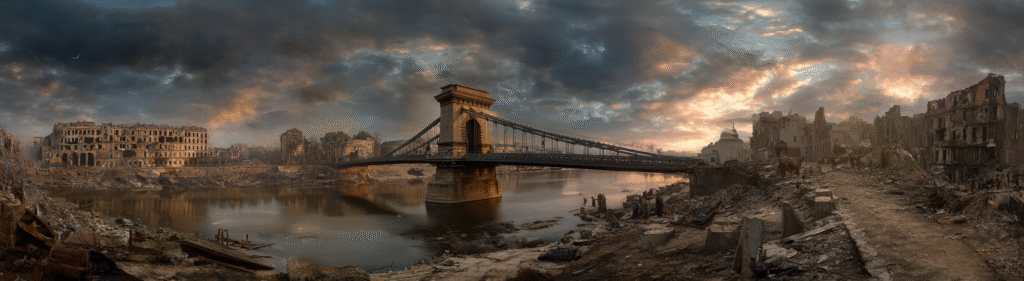
That bridge in Mostar—the one I stood on in ’92—was destroyed the following year, then rebuilt stone by stone in the 2000s. It stands today, not as a monument to reconciliation, but as a reminder of what was lost before the rebuilding began.
Ukraine’s bridges, literal and political, are being blown apart even now. If we wait until the dust settles to rebuild, we will once again be crafting memorials rather than preserving lives.
The Balkan playbook was written in blood and missed opportunities. In Ukraine, we had the advantage of foresight, of precedent, of a script already performed. Yet here we are, watching the same act unfold, hoping—against experience—that the ending might somehow be different.
History rarely repeats word for word, but the rhymes are unmistakable. And right now, the verses echo louder than anyone seems willing to admit.