
transportation

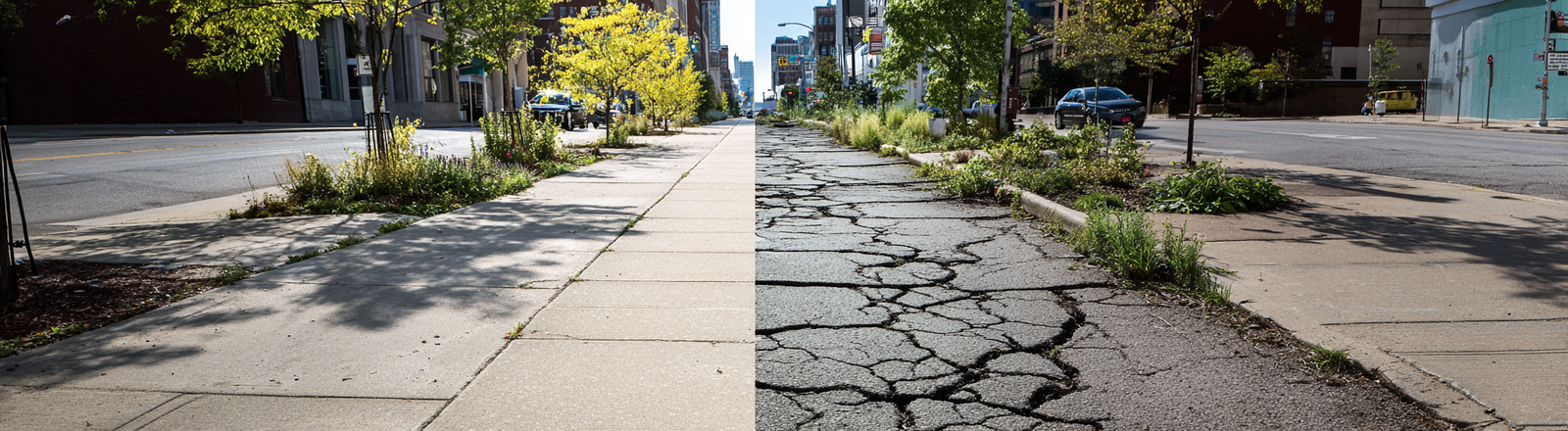
u7996237426 urban street split in two one side gleaming with b904a91a 1a9e 4335 809a 6688ba680e7b 1

Sidewalk Apartheid: Why Infrastructure Still Divides Cities

In many American cities, inequality is not only visible in income charts or school test scores. It is etched into the concrete beneath our feet. A cracked sidewalk in a low-income neighborhood, a missing curb ramp by a bus stop, a gleaming pedestrian plaza downtown — each tells a story about whose mobility is valued and whose is neglected. Sidewalks, often treated as afterthoughts of urban planning, remain one of the clearest markers of spatial injustice.

Sidewalk Apartheid: Why Infrastructure Still Divides Cities Read More »

Transit Deserts: How Poor Public Transport Perpetuates Inequality

At 5:12 a.m. in Atlanta’s southwest corridor, Marlene waits for the first bus of the day. It’s scheduled for 5:20, but she’s learned not to trust the timetable — delays of 20 or 30 minutes are common. She works at a warehouse 12 miles away, a job that pays just above minimum wage. Without a car, she relies on a patchwork of buses and transfers. One missed connection can mean arriving late, losing hours, or even losing the job.

Marlene’s neighborhood is a transit desert: a place where public transportation is so limited, infrequent, or poorly connected that daily life becomes a logistical and financial strain. For millions in American cities, this is not just an inconvenience — it’s a structural barrier to opportunity.

Transit Deserts: How Poor Public Transport Perpetuates Inequality Read More »