news

u7996237426 editorial illustration of glowing data streams fo 8cb54405 d983 4103 a60e a887bee0cfab 2

The Algorithm Will See You Now: How Predictive Models Outpace Public Health Systems

In the first weeks of 2020, before governments admitted the scale of a looming pandemic, algorithms were already sounding alarms. Models parsing airline ticket data, hospital search queries, and genomic sequences flagged anomalies faster than ministries of health. The episode was not just a cautionary tale about bureaucratic delay—it marked a turning point in how epidemics are detected, and who society trusts to raise the alarm.

The Algorithm Will See You Now: How Predictive Models Outpace Public Health Systems Read More »

u7996237426 a cinematic editorial hero image of a person bath e531dfbd 9e06 46bc b6fa c15ec735e56c 0

The Ritual of Refresh: How Online Habits Become Devotions

At dawn, before coffee or prayer, millions reach for the glow of their phones. A thumb swipes down, the screen reloads, and with it comes the possibility of revelation: a new message, a headline, a notification that insists the world has shifted overnight. This act—the compulsive refresh—resembles not just habit but ritual. It echoes the rhythm of ancient devotions, gestures repeated not because they always yield change, but because they promise the possibility of it.

The Ritual of Refresh: How Online Habits Become Devotions Read More »

u7996237426 an office floor dissolving into glowing code desk b2060410 f2f3 4647 b020 9dad35f9d6a9 3

The Middle-Office Meltdown: How AI Is Erasing the ‘Glue Jobs’ That Hold Companies Together

When people imagine automation, they usually picture robots replacing factory workers, or algorithms taking over call centers. The popular storyline is frontline roles versus machines. But a quieter transformation is underway—one that strikes at the “middle office,” the layer of analysts, coordinators, and specialists who keep companies running behind the scenes.

These are not the jobs that grab headlines. They’re the project managers who translate strategy into deadlines. The compliance officers who ensure reports are filed correctly. The junior accountants reconciling invoices. Individually, their work rarely makes the company newsletter. Collectively, they are the connective tissue—the glue—that keeps organizations functioning. And AI is coming for them.

The Middle-Office Meltdown: How AI Is Erasing the ‘Glue Jobs’ That Hold Companies Together Read More »

u7996237426 a scorching city street contrasted with lush gree a132b3ec 9222 443e 8b07 08236b862556 2

Shade Is Infrastructure: Designing Cities to Survive Heat

This summer, Phoenix recorded 31 consecutive days above 110°F. In Delhi, rooftop temperatures climbed so high that tin-sheet housing warped. Paris, once known for temperate summers, is rewriting building codes to address lethal heat waves. Around the world, cities are learning a hard truth: extreme heat is not just uncomfortable, it is deadly.

Yet most urban policy still treats shade as an amenity rather than infrastructure. Trees are considered beautification, awnings a design flourish, green canopies an afterthought in the fight for limited budgets. The result is predictable: wealthier neighborhoods enjoy leafy streets and shaded parks, while low-income residents endure what researchers call the “heat gap”—a measurable difference in ambient temperature that maps almost perfectly onto race and income.

Shade Is Infrastructure: Designing Cities to Survive Heat Read More »

The Global South’s Hidden Vaccine Innovation Hubs

When the world thinks of vaccine breakthroughs, the mental map tends to orient northward—to gleaming laboratories in Boston, Basel, or Berlin. Yet, over the past decade, a quieter revolution has been underway in places rarely associated with cutting-edge biotechnology. From Dakar to Hyderabad, São Paulo to Cape Town, the Global South has cultivated vaccine innovation hubs that are not merely adapting imported science, but generating their own.

This shift didn’t happen by accident. Three interwoven forces have driven it: the urgent public health needs of low- and middle-income countries, the gradual decentralization of vaccine production technology, and a wave of scientists trained abroad who are returning home. Together, these trends are rewriting the geography of medical innovation.

The Global South’s Hidden Vaccine Innovation Hubs Read More »

Biometric Borders: The Future of Travel or the End of Freedom?

At a growing number of airports, your face is now your boarding pass. A quick scan, a green light, and you’re waved through—no fumbling for IDs, no manual checks. To the weary traveler, it feels like a glimpse of the future: seamless, frictionless, efficient.

But this future carries a shadow. As biometric border systems spread—using fingerprints, iris scans, and facial recognition to verify identity—the convenience they promise comes with a question few passengers stop to ask: What happens to all that data, and who controls it?

Biometric Borders: The Future of Travel or the End of Freedom? Read More »

u7996237426 Ultra wide cinematic image of a Caribbean financi ef32378e 71dd 45b2 9709 439c6fc99435 1

The Quiet Collapse of Offshore Banking Havens

For decades, offshore banking havens—those small jurisdictions where capital could slip in quietly and taxes barely whispered its name—were fixtures of the global financial landscape. The British Virgin Islands, the Cayman Islands, Panama, Liechtenstein: they were more than tropical postcards and mountain chalets. They were nodes in a shadow network moving trillions of dollars across borders with minimal oversight.

That network is now shrinking—not with a bang, but with the steady grind of international regulation, transparency agreements, and political pressure. The collapse is quiet, but its effects are profound.

The Quiet Collapse of Offshore Banking Havens Read More »

Transit Deserts: How Poor Public Transport Perpetuates Inequality

At 5:12 a.m. in Atlanta’s southwest corridor, Marlene waits for the first bus of the day. It’s scheduled for 5:20, but she’s learned not to trust the timetable — delays of 20 or 30 minutes are common. She works at a warehouse 12 miles away, a job that pays just above minimum wage. Without a car, she relies on a patchwork of buses and transfers. One missed connection can mean arriving late, losing hours, or even losing the job.

Marlene’s neighborhood is a transit desert: a place where public transportation is so limited, infrequent, or poorly connected that daily life becomes a logistical and financial strain. For millions in American cities, this is not just an inconvenience — it’s a structural barrier to opportunity.

Transit Deserts: How Poor Public Transport Perpetuates Inequality Read More »

The Tyranny of the Majority in the Digital Age

In his 1835 Democracy in America, Alexis de Tocqueville warned of a danger inherent to democratic life: the “tyranny of the majority.” It was not the tyranny of kings, with armies and decrees, but of numbers — the tendency for the majority’s will to drown out, suppress, or delegitimize dissenting voices.

Nearly two centuries later, the town square has moved online. The algorithms that govern our social media feeds are, in a sense, Tocqueville’s fear made mechanical: they reward what resonates widely and punish what does not. In this arena, majority sentiment is not just powerful — it is amplified, quantified, and relentlessly reinforced.

The Tyranny of the Majority in the Digital Age Read More »

u7996237426 wide view of a parliament chamber one half bathed a92adbaf 6522 44ac 8f7b bfdd1f1f7e70 1

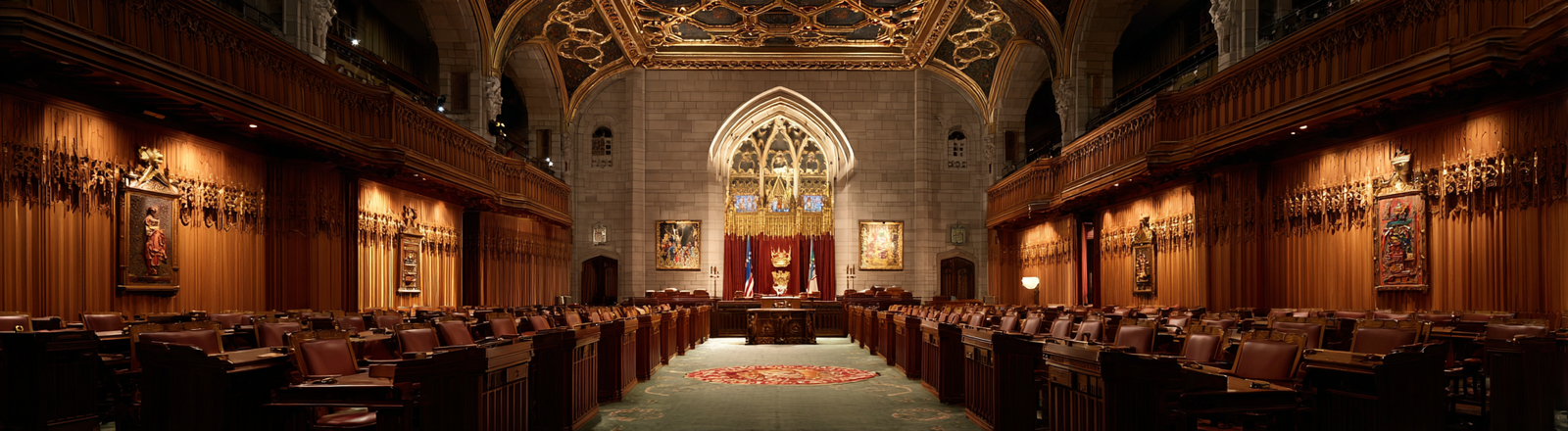
When Democracy Defends the Undemocratic

One of democracy’s proudest boasts is its tolerance for dissent—even dissent that seeks to dismantle democracy itself. We permit unpopular speech, unpopular parties, and unpopular candidates, not because they are harmless, but because we believe a free society should not pre-emptively silence its critics.

Yet this principle contains a paradox: What happens when the tolerance of the system becomes the mechanism of its undoing?

When Democracy Defends the Undemocratic Read More »