economics

u7996237426 a symbolic wide editorial image of an office skys 06acb3c0 1380 48a1 a001 14fa557474fc 0

The Promotion Paradox: Why Career Ladders Are Disappearing

For decades, the rhythm of working life followed a familiar beat: start at the bottom, prove yourself, climb a ladder rung by rung. Titles changed, salaries rose, and ambition was rewarded with stability. But look around today’s workplace—whether a gig platform, a start-up, or even a corporate office—and you’ll find fewer ladders and more flat floors. Promotions haven’t just slowed; in many places, they’ve quietly vanished.

The Promotion Paradox: Why Career Ladders Are Disappearing Read More »

u7996237426 vivid fantasy landscape with avatars gathered aro 6e893bb3 4b38 41d0 b63b 5c3ca518d0cd 1

Virtual Villages: How Online Gaming Worlds Become Cultural Homelands

In a Lagos café, a teenager dons a headset and enters a fantasy world where her guildmates speak three different languages but fight under the same banner. In São Paulo, a young man exiled by economics from his ancestral village finds community in a clan devoted to role-playing the lives of farmers. These are not idle diversions. They are virtual villages — digital homelands where identity is negotiated, belonging is forged, and diaspora finds a new terrain.

Virtual Villages: How Online Gaming Worlds Become Cultural Homelands Read More »

u7996237426 split scene of a living room as both office and h 75b61239 0e8e 4b49 8b88 9a4400783c0f 3

The Second Shift Online: How Remote Work Reinvented Domestic Labor

When the pandemic sent millions of workers home, remote work was hailed as liberation. No more commutes, more flexibility, a chance to balance career and life. But what many households discovered was less balance and more blending — a seamless overlap of professional and domestic responsibilities. And much like in the pre-pandemic economy, women disproportionately shouldered the invisible labor. Remote work didn’t erase gendered divisions of labor; it re-coded them into the digital age.

The Second Shift Online: How Remote Work Reinvented Domestic Labor Read More »

u7996237426 Ultra wide cinematic image of a Caribbean financi ef32378e 71dd 45b2 9709 439c6fc99435 1

The Quiet Collapse of Offshore Banking Havens

For decades, offshore banking havens—those small jurisdictions where capital could slip in quietly and taxes barely whispered its name—were fixtures of the global financial landscape. The British Virgin Islands, the Cayman Islands, Panama, Liechtenstein: they were more than tropical postcards and mountain chalets. They were nodes in a shadow network moving trillions of dollars across borders with minimal oversight.

That network is now shrinking—not with a bang, but with the steady grind of international regulation, transparency agreements, and political pressure. The collapse is quiet, but its effects are profound.

The Quiet Collapse of Offshore Banking Havens Read More »

u7996237426 ultra wide cinematic collage blending u.s. dollar 1bf1dcdc 861c 412e a9d3 bc287bee39d7 2

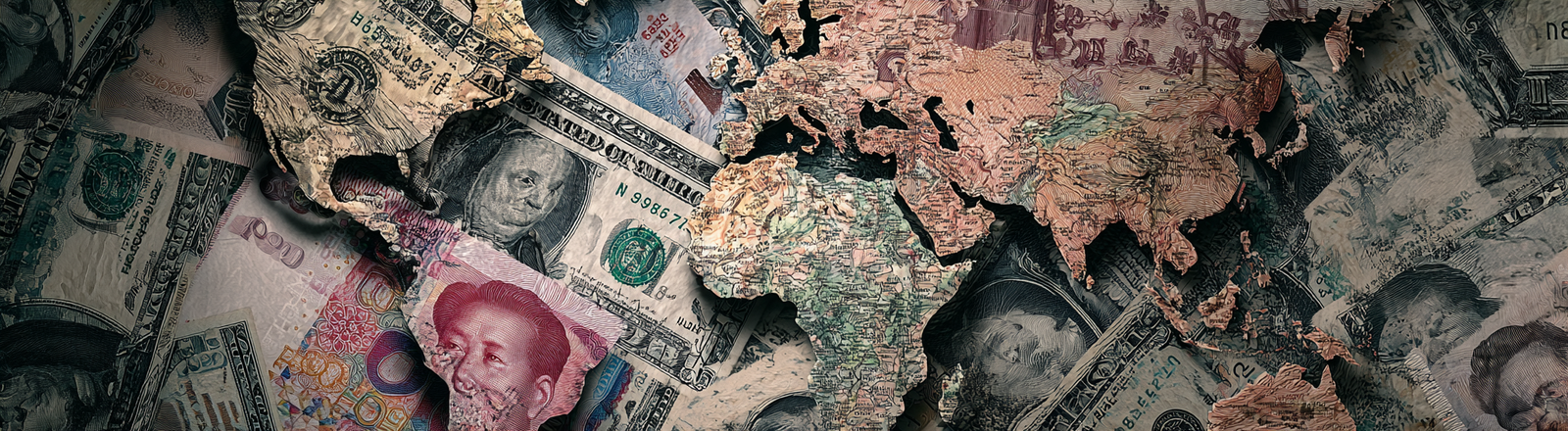
The Currency Cold War: Competing for the World’s Reserve

In the marble halls of central banks and the quiet meeting rooms of finance ministries, a high-stakes contest is unfolding. It’s not about tariffs or trade agreements. It’s about which currency the world will trust most — and, by extension, which nation will wield the greatest economic influence in the decades to come.

For nearly eight decades, the U.S. dollar has reigned as the world’s primary reserve currency, the backbone of global trade, and the benchmark for commodities from oil to gold. But in recent years, the euro and the Chinese yuan have been maneuvering for greater prominence, each seeking to loosen the dollar’s grip.

The Currency Cold War: Competing for the World’s Reserve Read More »

The Era of Cheap Debt is Over—Now What?

For more than a decade, the global economy ran on money so cheap it felt almost free. From the aftermath of the 2008 financial crisis through the pandemic years, near-zero interest rates and central bank asset purchases fueled an unprecedented era of borrowing. Governments financed stimulus packages without immediate pain, corporations refinanced at bargain rates, and households locked in historically low mortgages.

That era is over. And the transition will be neither smooth nor evenly felt.

The Era of Cheap Debt is Over—Now What? Read More »