By Ronan Pierce
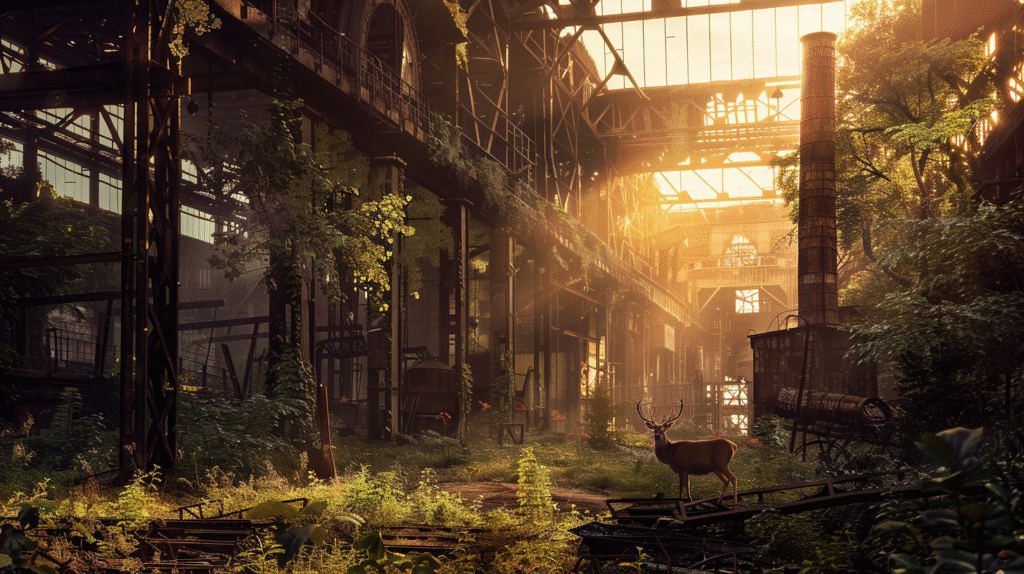
On the edge of Youngstown, Ohio, a factory lot once alive with molten steel now lies quiet, its concrete cracked, its roof long collapsed. Between the rusted girders, saplings push upward, roots probing through asphalt. What was once the epicenter of industrial might has become, almost without planning, a young forest. For locals, the sight is bittersweet: the grief of economic collapse mingled with the awe of ecological return.
From Collapse to Canopy
The decline of American heavy industry left scars—empty mills, abandoned rail yards, hollowed-out towns. But in the decades since, nature has crept back in. Peregrine falcons nest atop smokestacks, wetlands reclaim slag dumps, prairies rise in old parking lots. Biologists describe these areas as “novel ecosystems,” places where human abandonment becomes an opening for nonhuman flourishing.
Yet for residents, rewilding is not a scientific abstraction. It is lived reality: children catching frogs where their grandparents once caught shifts at the mill; deer browsing behind shuttered warehouses; community groups debating whether to mow vacant lots or let them grow.
The Human Cost of Renewal
To romanticize the forest without remembering the factory is to miss the full story. Jobs vanished with the industries, leaving communities grappling with unemployment, addiction, and population loss. The ecological renewal that delights visiting journalists can feel, to locals, like a cruel reminder of livelihoods lost. As one former steelworker told me, “I’m glad the birds are back. But I wish the paychecks were too.”
This tension complicates the narrative of “rewilding.” Ecological gain is entangled with economic grief, and any policy conversation must hold both truths at once.
Community Choices
Some towns are beginning to see opportunity in this paradox. In Gary, Indiana, a coalition of residents and environmental groups is turning abandoned lots into urban prairie preserves. In Pittsburgh, former steel corridors now host greenways that double as recreation spaces and stormwater buffers. These projects treat ecological recovery not as a consolation prize, but as infrastructure for new futures.
Still, questions linger: who benefits from rewilding? Will new green space raise property values and push out long-time residents? Will ecological tourism create jobs, or will it serve outsiders first? The answers will shape whether rewilding feels like renewal or erasure.
A New Story for Old Landscapes
The forests rising from rust are not a return to some preindustrial past. They are hybrids—oak and maple threading through concrete, coyotes trotting along freight spurs, monarch butterflies resting on rebar. They are reminders that decline and resilience can occupy the same ground.
For rural and post-industrial communities, the task now is to write policies that honor both stories: the grief of loss and the promise of renewal. If done with care, the Rust Belt may yet become not just a cautionary tale of collapse, but a case study in how endings can seed beginnings.