By Dr. Liora Watterson
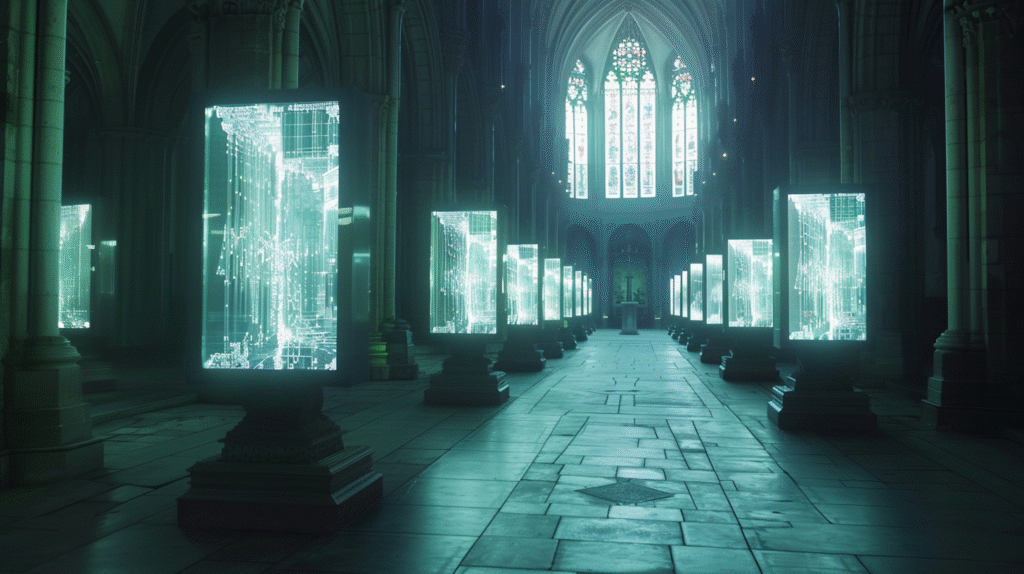
In medieval cathedrals, pilgrims would travel for weeks to glimpse a bone fragment, a torn garment, or a vial of dust said to have touched the divine. Relics anchored belief not by their material worth but by the aura of contact they preserved—an index of proximity to something transcendent. Today, in the labyrinthine cathedrals of the internet, a new form of relic circulates. Screenshots, blockchain tokens, archived memes: artifacts of digital culture imbued with authority and, at times, sanctity.
The Aura of Contact
A relic is less about what it is than what it touched. A sliver of wood claimed to be from the True Cross mattered because of its supposed contact with Christ. Likewise, a screenshot of a deleted tweet carries power not because pixels hold inherent value, but because they touch the fleeting moment of speech before it vanished. Digital relics function as proof of presence. They make visible what was ephemeral, fixing it into a token of truth.
Code as Relic
Blockchain intensifies this dynamic. An NFT, stripped of hype and speculation, is in essence a certificate of presence. It declares: this unique arrangement of code stands as witness, untouched, incorruptible. Like reliquaries, NFTs create scarcity where none exists, transforming ordinary data into sacred vessel. Whether one sees it as absurd or profound, the mechanism mirrors the ritual logic of relic veneration—an insistence that the intangible can be stabilized, sanctified, and owned.
Meme Shrines and Vernacular Piety
The meme, too, has become relic-like. Communities gather around images recycled endlessly, their origins half-forgotten, their meaning accumulated through repetition. A meme pinned, archived, or reposted at moments of crisis becomes more than a joke: it becomes a talisman, a reminder of shared experience. In this sense, internet forums resemble chapels, each preserving relics of cultural belonging, guarded fiercely against outsiders who would desecrate them.
Relics and Power
Relics have always been political. In medieval Europe, cities competed for the most prestigious relics to attract pilgrims and wealth. In today’s digital order, platforms and states compete to control digital relics—who archives them, who authenticates them, who profits from their circulation. A blockchain ledger or corporate server is not unlike the cathedral treasury, deciding which artifacts endure and which vanish. The authority to preserve relics is also the authority to shape collective memory.
The Afterlife of the Digital
What does it mean when code becomes sacred artifact? It means that in the secular sprawl of the digital world, we continue to hunger for presence, authenticity, and permanence. We enshrine lines of code as if they were bones, screenshots as if they were saints. We treat memes with the same vernacular reverence once offered to icons.
Perhaps this is not surprising. Human beings have always transformed the fragile and fleeting into vessels of the eternal. Today, the reliquary is not a gilded box in a cathedral nave, but a decentralized ledger, a pinned tweet, or a server rack humming in the dark. The impulse is the same: to hold fast to contact with what would otherwise be lost.