Economy & Work

Insights on labor, finance, and the shifting structures of markets and employment.

u7996237426 a digital dollar coin glowing over a financial sk acc67139 b879 4c02 b690 415c11ddde6f 2

Stablecoins as Shadow Reserves: Finance Without a Safety Net

In the long history of money, reserves have been the ballast that steadies the system. Central banks hold gold or dollars to reassure markets that when turbulence strikes, redemption is possible. Yet a new form of “reserve” has been growing in the shadows: stablecoins, digital tokens pegged to the U.S. dollar and traded at lightning speed across global platforms.

Tether, USD Coin, and a handful of others now represent more than $150 billion in circulation. They promise a simple proposition: one coin, always redeemable for one dollar. To traders in crypto markets, they are the grease that keeps transactions flowing. To investors in emerging economies, they have become a lifeline—an unofficial dollarization for those wary of local inflation.

But behind this apparent stability lies fragility. Stablecoins are not backed by a central bank’s balance sheet. They are private promises, supported by opaque portfolios of short-term debt and cash equivalents. And unlike bank deposits, they are not insured.

Stablecoins as Shadow Reserves: Finance Without a Safety Net Read More »

Why the Gig Economy’s Second Act Could Be Worse Than the First

When the gig economy burst onto the scene in the early 2010s, it came wrapped in the language of freedom. Be your own boss. Set your own hours. Work from anywhere. For a while, it felt like a bargain—especially for people shut out of traditional jobs or looking to make ends meet on their own terms.

But beneath the app-based convenience, the first act of the gig economy carried hidden costs: income instability, lack of benefits, algorithmic control. Many workers discovered that “flexibility” could mean unpredictable schedules and “independence” often came without a safety net.

Now, as the sector evolves, we’re entering what I call the second act—and the warning signs suggest it may be even harsher than the first.

Why the Gig Economy’s Second Act Could Be Worse Than the First Read More »

u7996237426 Ultra wide cinematic image of a Caribbean financi ef32378e 71dd 45b2 9709 439c6fc99435 1

The Quiet Collapse of Offshore Banking Havens

For decades, offshore banking havens—those small jurisdictions where capital could slip in quietly and taxes barely whispered its name—were fixtures of the global financial landscape. The British Virgin Islands, the Cayman Islands, Panama, Liechtenstein: they were more than tropical postcards and mountain chalets. They were nodes in a shadow network moving trillions of dollars across borders with minimal oversight.

That network is now shrinking—not with a bang, but with the steady grind of international regulation, transparency agreements, and political pressure. The collapse is quiet, but its effects are profound.

The Quiet Collapse of Offshore Banking Havens Read More »

u7996237426 ultra wide cinematic collage blending u.s. dollar 1bf1dcdc 861c 412e a9d3 bc287bee39d7 2

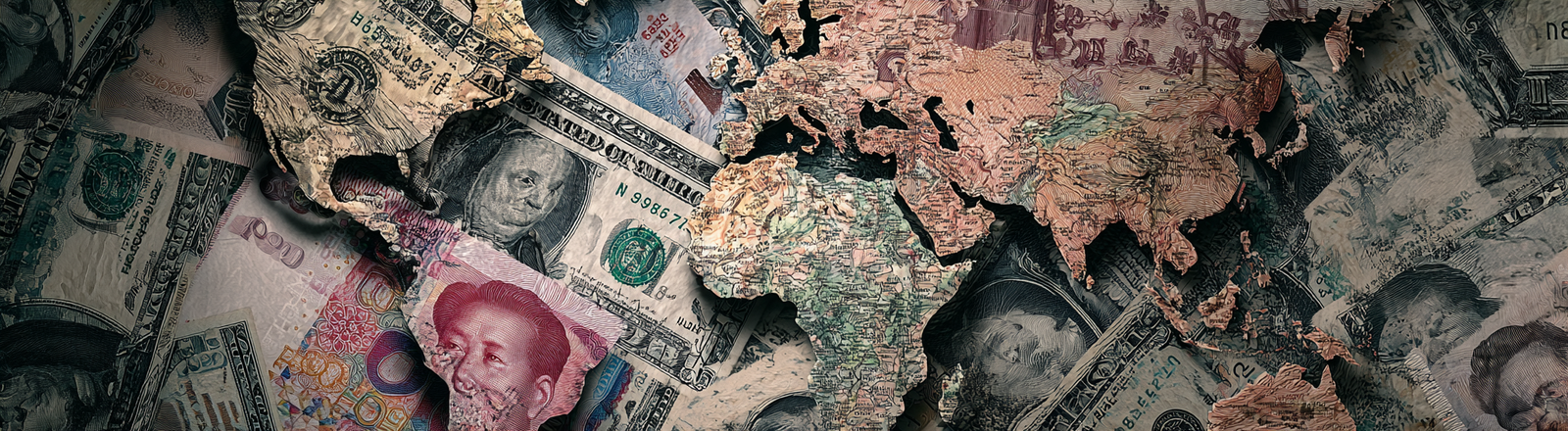
The Currency Cold War: Competing for the World’s Reserve

In the marble halls of central banks and the quiet meeting rooms of finance ministries, a high-stakes contest is unfolding. It’s not about tariffs or trade agreements. It’s about which currency the world will trust most — and, by extension, which nation will wield the greatest economic influence in the decades to come.

For nearly eight decades, the U.S. dollar has reigned as the world’s primary reserve currency, the backbone of global trade, and the benchmark for commodities from oil to gold. But in recent years, the euro and the Chinese yuan have been maneuvering for greater prominence, each seeking to loosen the dollar’s grip.

The Currency Cold War: Competing for the World’s Reserve Read More »

u7996237426 ultra wide cinematic image of a modern open offic caec6a14 6f27 47b8 995c 6961d840e06e 3

The Productivity Trap: Why Working Smarter Isn’t Always Working Less

A marketing manager I spoke with recently had just finished a two-hour task in thirty minutes, thanks to a new AI-driven content tool. She was proud — until her boss, seeing the speed, handed her two more projects “while she had time.”

That’s the productivity trap in action: efficiency gains that should free us end up filling the same hours — or more — with extra work.

Economists call this the “rebound effect,” and it’s been quietly shaping labor markets for over a century. The technologies that make us faster, more accurate, or more organized can paradoxically tighten the workload rather than loosen it.

The Productivity Trap: Why Working Smarter Isn’t Always Working Less Read More »

u7996237426 modern open plan office half the desks empty sunl 71b712e8 41fc 4f67 bc86 67b7ecfd13da 3

The Four-Day Week Won’t Save Us—Unless We Change How We Work

The four-day workweek has become the workplace equivalent of a miracle diet: cut a day, keep the pay, and watch productivity soar. Trials from Iceland to the UK suggest it’s not just possible—it’s popular. But here’s the uncomfortable truth: simply swapping five days for four without rethinking how we work risks being little more than a long weekend with a productivity hangover.

The Four-Day Week Won’t Save Us—Unless We Change How We Work Read More »

The Era of Cheap Debt is Over—Now What?

For more than a decade, the global economy ran on money so cheap it felt almost free. From the aftermath of the 2008 financial crisis through the pandemic years, near-zero interest rates and central bank asset purchases fueled an unprecedented era of borrowing. Governments financed stimulus packages without immediate pain, corporations refinanced at bargain rates, and households locked in historically low mortgages.

That era is over. And the transition will be neither smooth nor evenly felt.

The Era of Cheap Debt is Over—Now What? Read More »