By Dr. Leila Mbaye
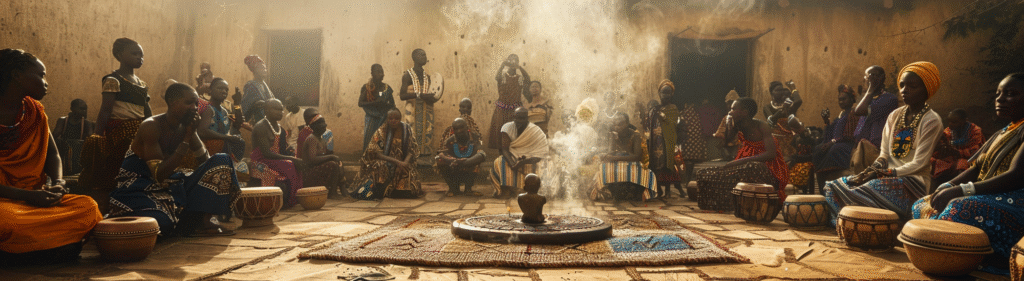
In a small courtyard in Benin City, Nigeria, the air thick with incense and drumbeats, a bronze head was lowered onto a woven mat. It had traveled for more than a century—from palace to colonial ship, from European museum to climate-controlled gallery—and now, finally, back home. The gathered crowd did not whisper the language of “cultural property” or “collection management.” They spoke instead of ancestors, of repair, of voices long silenced.
Repatriation is often framed in the language of restitution: the object as evidence of historical theft, the return as moral correction. Yet in the lives of communities, return is not only an act of closing the past. It is also an opening—a re-entry of ritual power, of livelihoods, of contested authority.
Beyond the Museum Frame
For Western institutions, artifacts have long been encased in glass, treated as static works of art. But many of these objects were never meant to be inert. Masks danced. Drums spoke. Bronze plaques adorned royal courts as living records of genealogy and rule. Their removal did not simply deprive communities of beauty; it disrupted circuits of meaning and practice.
When such objects return, they rarely resume precisely where they left off. Communities change. Rituals evolve. Elders who once knew the songs that accompanied a mask may have passed. But the act of return reactivates questions: who may touch it, who may profit from its display, whose authority is affirmed in its presence?
Livelihoods and Local Economies
Repatriation is not only spiritual or symbolic. It reverberates through local economies. A returned artifact may become a magnet for cultural tourism, generating revenue for artisans, guides, and hoteliers. Yet it may also spark disputes over control: should the artifact rest in a national museum, accessible to international visitors, or in a village shrine, accessible to only a few?
These choices carry consequences. In Ghana, the return of certain royal regalia has prompted investments in new cultural centers, while in Kenya, smaller communities fear that once artifacts are centralized in capital cities, they will again be out of reach—this time by domestic elites rather than foreign powers.
Authority and Identity
Anthropologists often speak of “cultural authority”—the right to interpret and represent heritage. Repatriation sharpens this issue. Does authority lie with traditional leaders, elected officials, museum professionals, or diaspora communities who also claim a stake? Each return forces negotiation over identity not just between nations, but within them.
These negotiations can be fraught, but they are also generative. They push communities to articulate what heritage means today—not just what it meant before colonial theft. In some cases, the arrival of an artifact catalyzes new rituals, blending ancestral practice with contemporary needs. In others, it sparks political activism, as younger generations demand broader reparations beyond objects: investments in education, land rights, or healthcare.
A Future Still Unfolding
To see a bronze head, a mask, or a drum simply as an object is to miss its second life. After repatriation, these are not merely artifacts of history; they are catalysts of futures—ritual, economic, and political.
The return is not the end of the story. It is the beginning of a new chapter, written not in curatorial labels but in the living practices of communities reclaiming what was taken.