By Dr. Amara Voss
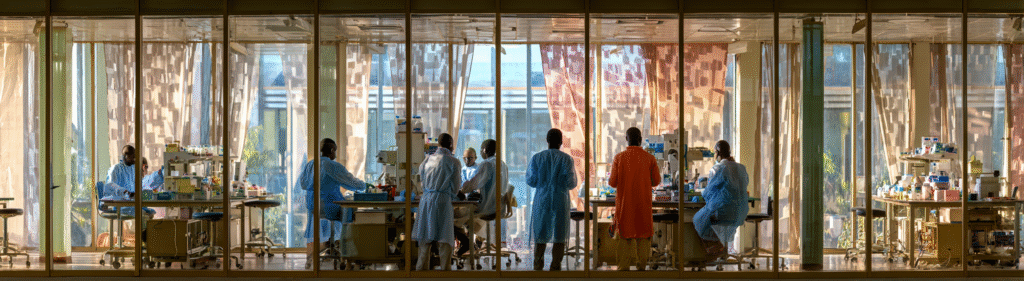
When the world thinks of vaccine breakthroughs, the mental map tends to orient northward—to gleaming laboratories in Boston, Basel, or Berlin. Yet, over the past decade, a quieter revolution has been underway in places rarely associated with cutting-edge biotechnology. From Dakar to Hyderabad, São Paulo to Cape Town, the Global South has cultivated vaccine innovation hubs that are not merely adapting imported science, but generating their own.
This shift didn’t happen by accident. Three interwoven forces have driven it: the urgent public health needs of low- and middle-income countries, the gradual decentralization of vaccine production technology, and a wave of scientists trained abroad who are returning home. Together, these trends are rewriting the geography of medical innovation.
Beyond “Fill and Finish”
For years, many countries in the Global South were limited to what’s called “fill and finish” operations—importing bulk vaccine material, packaging it locally, and distributing it. While valuable, this step kept them dependent on foreign intellectual property and supply chains.
Now, facilities like the Biovac Institute in South Africa and the Butantan Institute in Brazil are leading original research, designing vaccines tailored to local epidemiological profiles. In India, Bharat Biotech’s intranasal COVID-19 vaccine—an approach still rare in the Global North—demonstrates a capacity for bold, context-driven innovation. These are not derivative works; they’re firsts.
The Returnee Effect
Perhaps the most human dimension of this transformation is the story of “returnee” scientists. Many earned advanced degrees in Europe or North America and could have remained there. Instead, they chose to bring their expertise home—often at a cost to their personal incomes but in service to a bigger goal: building indigenous research capacity.
One Kenyan immunologist I spoke with described the decision simply: “I realized that solving our health problems here would require solving our research problems here.” Her team is now developing a candidate malaria vaccine that targets a parasite strain prevalent in East Africa but largely absent from Western R&D priorities.
Navigating the Patent Landscape
The ethical dimension of this rise is complex. Patent regimes, designed to protect intellectual property, often restrict technology transfer to countries without large corporate lobbying power. This tension came to the forefront during COVID-19, when many Global South leaders called for a temporary waiver on vaccine patents—a proposal that exposed the friction between profit models and public health imperatives.
Yet innovation hubs are finding creative workarounds: open-source vaccine platforms, regional R&D alliances, and local manufacturing partnerships that bypass the need to import entire technologies. These strategies may prove crucial in addressing not only pandemics but also endemic diseases often neglected by global pharmaceutical markets.
Why This Matters Globally
Global health equity is not charity—it’s strategy. The COVID-19 pandemic revealed that supply bottlenecks in one region can endanger everyone. Vaccine hubs in the Global South are a form of resilience for the whole world: more distributed expertise means faster, more culturally attuned responses to emerging health threats.
Still, sustaining these hubs will require continued investment, political will, and equitable access to raw materials and research tools. Without that, today’s gains could stall, and the old dependency patterns could reassert themselves.
The challenge, and the opportunity, is to stop seeing these laboratories as peripheral and start recognizing them as central players in the shared future of global health. The map of vaccine innovation is changing—and the rest of the world would be wise to catch up.